1. Home
  2. Gezondheidsroutes
  3. Reuma

What do you think of our website?

We would love to hear what works well and what could be better. Your feedback helps us improve our website.

What would you like to give feedback on?

Read how we use feedback data.

Please note: Do not share medical details or a citizen service number (BSN).

Rondom – Het leven loopt lekkerder
Nederlands
  • Employers
  • Partners
  • Research
  • Working at
Rondom app
Working together
Rondom – Het leven loopt lekkerder
Working together
Rondom – Het leven loopt lekkerder

We’d be happy to help you further.

  • 088-1180570
  • info@rondomlopengroep.nl

Need help?

  • Complaints procedure
  • Collaborating on research
  • Taking part in research
  • Reuse of healthcare data

Contact

    Need help?

    • Complaints procedure
    • Collaborating on research
    • Taking part in research
    • Reuse of healthcare data

    Contact

      Services

      • Occupational therapy
      • Lifestyle and Dietetics
      • Podiatry and chiropody care
      • Psychology and social work
      • Physiotherapy
      • Rondom in Business
      • Rondom Shoes

      Discover Rondom

      • Healthy living and participation
      • Activities
      • Rondom app
      • Social impact
      • Research

      About Rondom

      • Current
      • Find a location near you

      Follow Rondom

      LinkedInInstagramFacebook

      Life runs more smoothly.

      General (payment) terms and conditionsPrivacy StatementCookie policy

      Rheumatism Route

      For people with rheumatism who, in addition to their medical treatment, are seeking help with mobility, fatigue, work and everyday life.

      Support for everyday life with rheumatism

      You have rheumatism and are receiving medical care for this from your GP, rheumatologist or other healthcare professional. They help you with tests, medication and treating the condition. However, there isn’t always enough time during a consultation to discuss in detail everything that affects your daily life.

      Rheumatism can affect your mobility, energy levels, sleep, work, household chores and social activities. Perhaps you would like to learn how to manage pain and fatigue, or are you looking for help with your feet, shoes or daily activities?

      Support is available for these issues, but is often spread across different care providers and organisations. This can make it difficult to find the right help and keep track of everything.

      That is why the Reuma Route exists. Together with a dedicated case manager, you will look at your situation, what is important to you and what support is appropriate. In this way, you will work together to map out a personalised Route that helps you to live as fit, independent and healthy a life as possible with rheumatism.

      At Rondom, healthcare professionals from various disciplines work together within a single organisation. They coordinate their support so that you do not have to work out for yourself who to turn to and how the various pieces of advice fit together.

      Keep doing what matters to you

      Discuss your situation with one of our case managers

      Our approach

      Rheumatism often has more consequences than just pain or stiff joints. You may be moving less because something is causing you pain. This can lead to a decline in your strength or fitness. Fatigue can make it harder to work, do household chores or keep up with social activities. Stress and poor sleep can also affect how much your symptoms bother you.

      That is why, within the Rheumatism Route, we look at various aspects of your situation:

      • In physical terms, for example, we look at pain, stiffness, fatigue, movement, strength and fitness;
      • Mentally, for example, we look at worries, uncertainty, gloom and coping with the effects of rheumatism;
      • When it comes to lifestyle, for example, we look at sleep, recovery, nutrition, exercise and how you manage your energy.

      So we don’t just look at your joints or symptoms, but also at what you want to continue doing – or be able to do again – in your daily life. You don’t necessarily need help in every area. The type of support that suits you depends on your situation and goals. Sometimes help in one area is enough; sometimes a combination works better.

      Three overlapping areas: physical challenges, mental challenges and lifestyle challenges, with you at the centre.

      Case manager

      The Rheumatism Route begins with a discussion with your case manager. Together, you will discuss what rheumatism means for your daily life, what medical care and other support you are already receiving, what matters most to you, and where best to start. You will have a say in deciding your goals, the support you receive and the pace of the Route.

      The case manager works with you to keep track of things, monitors your progress and ensures that the healthcare professionals involved work together effectively. If your symptoms, your ability to cope or your wishes change, you will discuss together whether the plan needs to be adjusted.

      With your consent, the case manager will liaise with your GP, rheumatologist or other healthcare professional where necessary. This means you do not have to coordinate all your care and advice yourself.

      The Reuma Route is a supplement to your medical care. Your GP and rheumatologist remain responsible for examinations, medication and the medical treatment of rheumatism.

      Would you like to know more about the role of the case manager? Read more here about the case manager within our Health Pathways.

      Please contact one of our case managers

      Which healthcare providers might be involved?

      Various healthcare professionals may be involved in the Rheumatism Pathway. Which healthcare professional is right for you depends on your symptoms, questions and goals.

      • Physiotherapist: helps with mobility, strength, fitness, stiffness and confidence in your body.
      • Occupational therapist: helps with energy management, daily activities, assistive devices and work.
      • Podiatrist: assesses foot problems, walking, pressure under the feet and suitable footwear.
      • Medical pedicure: helps with nail, skin and pressure problems affecting the feet.
      • Lifestyle coach: supports sleep, recovery, exercise and daily routines.
      • Psychologist: helps with worries, low mood, uncertainty and coping with the effects of rheumatism.
      • Dietitian: provides advice on nutrition, weight and eating habits.

      Because these healthcare professionals work together within Rondom, they can coordinate their advice. For example, increasing your physical activity is tailored to the way you manage your energy and carry out your daily activities.

      Working at Rondom

      Support, even between appointments

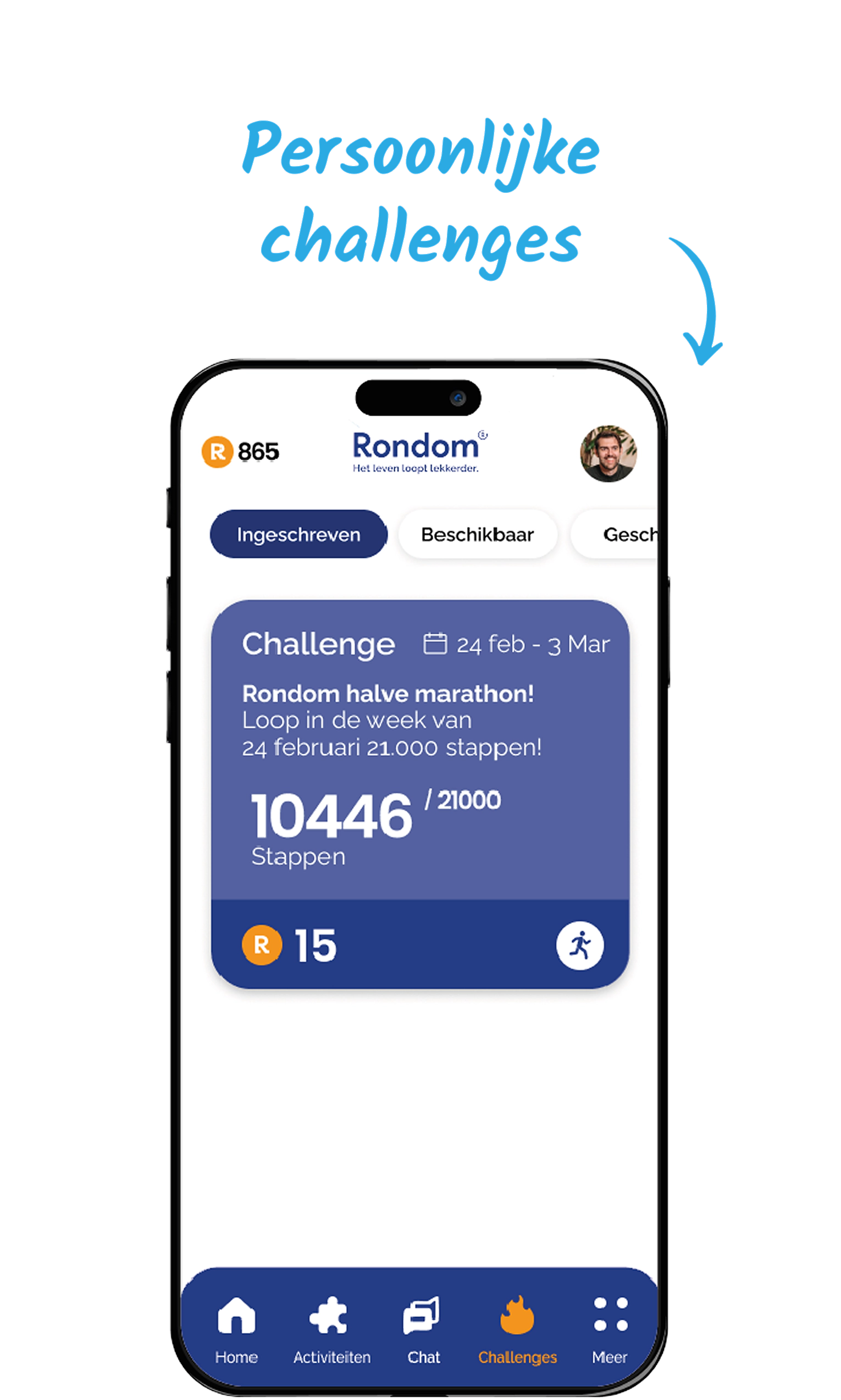
      With rheumatism, symptoms can vary from day to day. Using the Rondom app, you can continue to work towards your goals between appointments.

      In the app, for example, you can:

      • view your appointments and personal goals;
      • information, exercises and practical tips on topics such as exercise, nutrition, recovery and coping with fatigue;
      • view relevant information and exercises that your practitioner has prepared for you;
      • completing questionnaires;
      • stay in touch with your healthcare providers and case manager.

      This means you have information, exercises and appointments all in one place. You can view them at a time that suits you. The app complements your personal appointments.

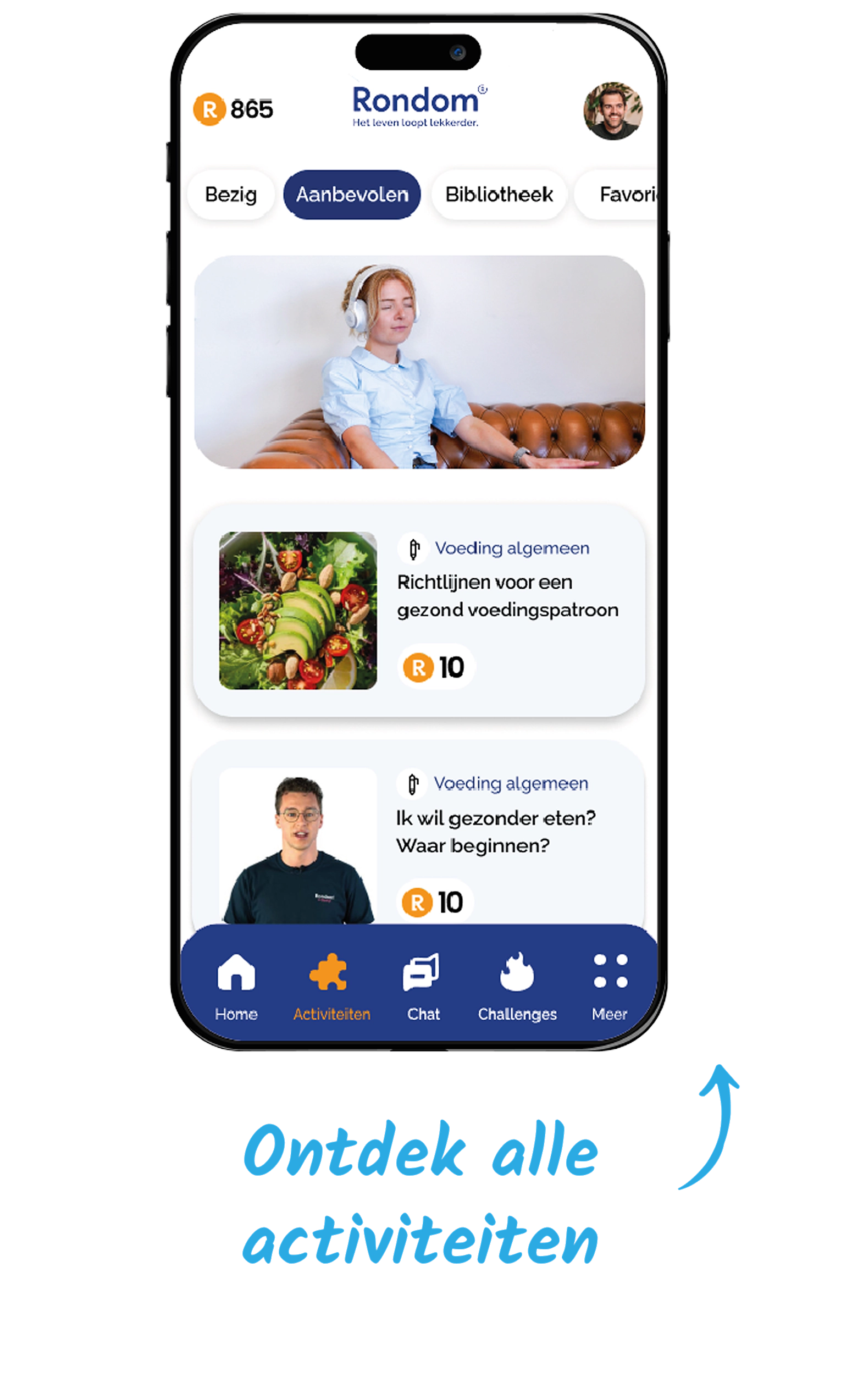
      • Ontdek alle activiteiten
      • Persoonlijke challenges

      Contact form

      The Rheumatism Route will be available from October 2026. You can register your interest now. Please provide your details below. A member of staff from Rondom will contact you to briefly discuss your situation and any questions you may have. Completing this form is non-binding. By doing so, you are not yet definitively registering for the Route.

      We will use your contact details and brief explanation to get in touch with you, assess the most appropriate next step and organise an initial consultation. Please do not include a detailed medical history in the free-text field; we will discuss this later via a suitably secure channel.

      Please note: your reply will be forwarded by email. Therefore, do not share any health information, your BSN or other sensitive personal data.


      Frequently asked questions


      • The Reuma Route is for people with various forms of rheumatism who, alongside their medical treatment, are seeking support in their daily lives. The type of rheumatism you have does not determine the support you receive. We focus primarily on the challenges you face, what you wish to achieve, the medical care you are already receiving, and what suits your lifestyle.

      • Yes. The healthcare professionals have undertaken additional training on rheumatism, the ‘Rheumatism Route’ approach and collaboration with other healthcare professionals.

        The case managers have also been specially trained for their role within the Rheumatism Route. They have knowledge of rheumatism and the impact it can have on mobility, fatigue, work and daily activities. This enables them to work with you to determine what support is appropriate and when consultation with your GP or rheumatologist is required.

      • Yes. Your GP or rheumatologist remains responsible for your medical care, such as examinations, medication and the treatment of rheumatism. The Reuma Route focuses on providing additional support in your daily life. With your consent, we will consult your GP, rheumatologist or other healthcare professional where necessary.


      • Your GP or specialist remains responsible for your examinations, diagnosis, medication and medical treatment. They are often able to provide you with good support in these matters. However, during an appointment, there is not always enough time to discuss in detail everything else that affects how you feel and function.

        Think of exercise, energy, sleep, stress, nutrition, feet, work, aids and daily activities. Help with these topics is often available, but spread across different healthcare providers and organisations. This can make it difficult to know where to turn and how all the advice fits together.

        Within a Health Pathway, we bring this support together. Your case manager will help you get an overview and will work with you to determine which healthcare provider or combination of providers is best suited to your situation. With your consent, we will coordinate the support with your GP, specialist or other medical practitioner where necessary.

      • With a standard appointment, your care needs are often assessed by a single healthcare professional from a single discipline. Within a Route, we take a broader view.

        This means, for example, that we pay attention to:

        • physical functioning
        • mental resilience
        • lifestyle and daily routines
        • work and participation
        • the relationship between various symptoms and factors

        This way, you won’t have to figure everything out for yourself, and it creates a sense of calm, clarity and coherence.

      • No. You do not follow a set programme. The Route is tailored to your situation, your goals, the medical care you are already receiving and what you are able to cope with at that time. Not every healthcare provider needs to be involved.

      • The case manager is your designated point of contact throughout the Route. Together, you will discuss the challenges you face, what you would like to achieve and what support would be most appropriate.

        The case manager keeps track of everything, monitors your progress with you and ensures that the healthcare professionals involved work together effectively. If your situation changes, you will discuss together whether the plan needs to be adjusted.

      • That varies from person to person. The duration depends on your situation, your goals and the support you need.

        When things are going well, the support you receive will gradually be reduced. You will increasingly be able to carry on on your own using what you have learnt. If you need help again later on, you can easily get in touch once more.

      • A Route does not have a fixed end date. You will regularly discuss with your case manager how things are going and whether you still need support.

        Are you able to manage on your own and do you have a good grasp of your situation? If so, the level of support will be reduced. Together, you will also discuss what you can do if your symptoms return or get worse.

        If you do need help again at a later date, you can contact your case manager once more.

      • Which healthcare services are covered varies depending on the healthcare provider, treatment and insurance policy. Some healthcare is covered by basic insurance. For other healthcare, you may need supplementary insurance or you may have to pay part of the cost yourself.

        Your case manager will always work with you to determine what support is suitable and what options are available under your insurance cover. You will also be given a clear explanation of any potential costs in advance. That way, you’ll know exactly where you stand.

      • Whether you need a referral depends on the healthcare provider, the treatment and your insurance. Your case manager will look into this with you.

      • The Rondom app supports you during the Route. In the app, you can:

        • view your appointments;
        • track your goals and progress;
        • find information, exercises and tips;
        • completing questionnaires;
        • chat easily with your healthcare providers.

        This helps you keep track of things and stay involved with your Route even between appointments. The app does not replace personal contact, but helps you to stay in touch easily.

        Are you unable or unwilling to use the app? In that case, we’ll discuss together what would suit you best.

      • Are your symptoms changing, or have you suddenly started to feel worse? If so, please discuss this with your case manager. Together, you can work out what needs to be done.

        If you need medical care, the case manager will help you get in touch with, for example, your GP, a specialist or another suitable healthcare provider.

      • You can use the contact form on this page to let us know that you are interested. A member of staff from Rondom will contact you to briefly discuss your situation and any questions you may have.

        Filling in the form is non-binding. Doing so does not automatically enrol you on a Route.