1. Home
  2. Care
  3. Voet
  4. Orthese

What do you think of our website?

We would love to hear what works well and what could be better. Your feedback helps us improve our website.

What would you like to give feedback on?

Read how we use feedback data.

Please note: Do not share medical details or a citizen service number (BSN).

Rondom – Het leven loopt lekkerder
Nederlands
  • Employers
  • Partners
  • Research
  • Working at
Rondom app
FoundationAfspraak maken
Rondom – Het leven loopt lekkerder
Afspraak maken
Rondom – Het leven loopt lekkerder

We’d be happy to help you further

  • 088-118 0570
  • info@rondomlopengroep.nl

Need help?

  • Frequently Asked Questions
  • Reimbursements
  • Complaints procedure
  • What does your health insurer cover?

Contact

  • Book an appointment

Need help?

  • Frequently Asked Questions
  • Reimbursements
  • Complaints procedure
  • What does your health insurer cover?

Contact

  • Book an appointment

Services

  • Occupational therapy
  • Lifestyle and Dietetics
  • Podiatry and chiropody care
  • Psychology and social work
  • Physiotherapy
  • Rondom in Business
  • Rondom Shoes

Discover Rondom

  • Healthy living and participation
  • Activities
  • Rondom app
  • Social impact
  • Research

About Rondom

  • Current
  • Find a location near you

Follow Rondom

LinkedInInstagramFacebook

Life runs more smoothly.

General (payment) terms and conditionsPrivacy StatementCookie Policy
  • What is an orthosis?
  • Use and maintenance
  • Shoe tips
  • Download the Rondom app
  • Make an appointment

Orthese

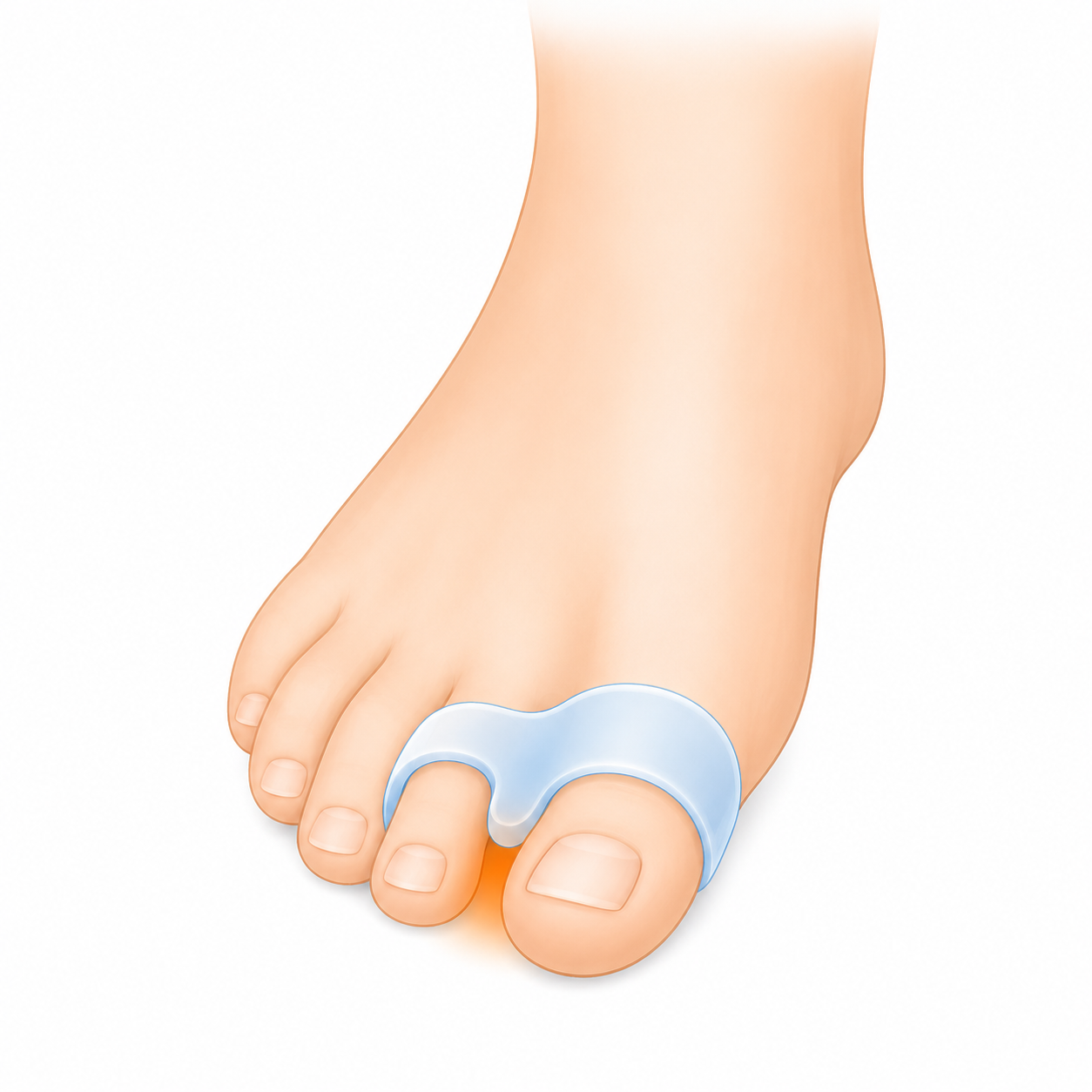
A (silicone) orthosis is a device that supports your toes and can reduce pressure points on the toes or foot.

The orthosis helps to distribute the pressure on the toes and reduce friction. This can help to reduce or prevent symptoms and make walking more comfortable.

Orthese Rondom
What is an orthosis?

A (silicone) orthosis is a device that supports your toes and can reduce pressure points on the toes or foot.

The orthosis helps to distribute the pressure on the toes and reduce friction. This can help to alleviate or prevent symptoms and make walking more comfortable.

Use and maintenance

Was this information helpful?

It is important that the orthosis fits properly and does not cause any pain or irritation whilst being worn. Are you experiencing any pain or irritation? If so, please contact us during office hours on 088-1180500 or at info@rondompodotherapeuten.nl.

To use the orthosis correctly, please follow these instructions:

  • During the first few days of using the orthosis, it is a good idea to check your feet a little more often. Check for any redness or blisters caused by the orthosis;
  • Place the orthosis in the correct position on your foot using both hands. Or ask someone to help you;
  • You can clean the orthosis daily with soap and water. When you are not using the orthosis, store it in a container with talcum powder;
  • Handle the orthosis with care. An orthosis is fragile and can tear easily;
  • Has the orthosis unfortunately been damaged or torn? If so, it can often be repaired. Please contact us during office hours on 088-1180500 or info@rondompodotherapeuten.nl .
Shoe tips

Good shoes are important if you wear an orthosis. The orthosis takes up some space in the shoe. That is why it is important that the shoe fits well and provides sufficient support. This ensures the orthosis works most effectively.

If you wear an orthosis, it is important to bear this in mind when buying shoes. Please note the following:

  • Buy shoes in the afternoon. Your feet may swell a little as the day goes on. That way, you’ll be better able to tell if the shoes fit properly;
  • Always try on both shoes. It is normal for one foot to be larger than the other. Buy shoes to fit your larger foot;
  • Try on shoes whilst standing. Your foot is longer when you are standing. When walking, your foot becomes slightly longer still;
  • Walk around a bit whilst trying them on. Take your time. If you’re unsure, don’t buy the shoes;
  • Make sure the shoe fits properly when trying it on and wearing it. Pull the laces tight and tie them securely. Fasten the Velcro properly;
  • Choose a shoe with a sturdy heel counter. This provides greater stability and reduces the risk of twisting your ankle;
  • A shoe does not get bigger with use. The material may become more supple, but the size remains the same. So do not buy a shoe that ‘needs to be broken in’;
  • Ensure there is sufficient space for the toes. Pay attention to space in terms of length, width and height. Insufficient space can cause pain;
  • Pay attention not only to the size, but also to the fit. Sizes can vary from one brand to another;
  • Choose a heel height that allows your calf to remain relaxed. The heel is best between 1 and 2 centimetres high. This may be up to 3 centimetres. A wider heel provides greater stability;
  • Pay attention to the bend in the shoe. This should be in the same place as the bend in your foot;
  • Check the inside of the shoe. There should be no seams or stitching inside the shoe that could cause irritation;
  • It is best not to choose low shoes that do not reach the ankle. Low shoes provide less support, which means you are more likely to fall. The shoe may also slip at the heel.
Work on your health with the Rondom app

  • Direct contact with healthcare professionals via chat
  • A community where you share experiences and motivate one another
  • Personal challenges that match your goals
  • Step counter for your daily exercise
  • Earn points for healthy choices
  • Articles, videos, recipes and assignments
  • Register for (online) events
Discover the Rondom app

Find a healthcare provider near you

Book an appointmentCall usDownload the Rondom app